Oct 04 22
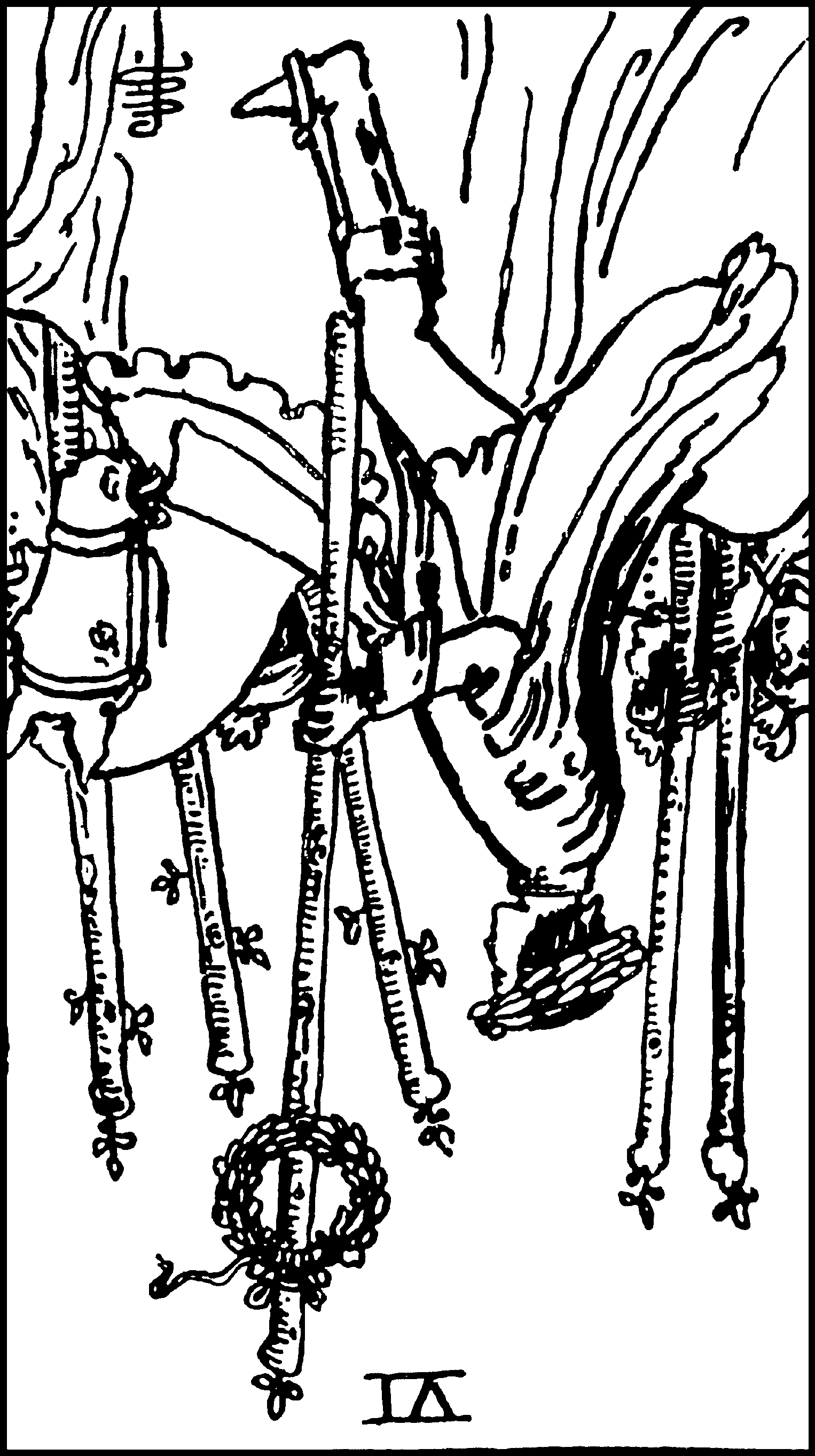
Six of Wands (reversed)

59. Dispersion [Dissolution]
29. The Abysmal (Water)
Doubt ensnares; egotism rises to compensate.
Take a step back and find a basic self. To do this see your commonality with things larger than human topicality.
This self is less reactive, less cornered.
Greet this self with calm appreciation.
Promote this calmer more even self to the forefront of your personality.
This is the true/best self. Try to make this self the chief decision maker in all situations.
This week we pulled the Six of Wands reversed. When encountered upright the meaning is pride in success (a goal has been achieved and it is clear that it is due to one’s abilities). When the card is reversed (as it is here) one has significant (and stymying) doubt about their powers. Failure is in view and uncertainty circles like distant vultures.
Our first hexagram this week is #59, Dispersion (Dissolution). It is taken as a given that unity among people is necessary for proper functioning. Here we have a depiction of how, and by whom, such a condition is fostered. The I Ching is an ancient text so its employment of religious devotion can be updated a bit — we think, without distortion; in today’s parlance it is not religious devotion that is necessary to unite people, but something like broad metaphysical understanding. Nothing has changed as far as the type of person to administer such understanding — they must be markedly unselfish. “Through hardness and selfishness the heart grows rigid, and this rigidity leads to separation from all others. Egotism and cupidity isolate humans. Therefore hearts must be seized by a devout emotion.” “But only a person who is free of all selfish ulterior considerations, and who perseveres in justice and steadfastness, is capable of so dissolving the hardness of egotism.” There was one change this week, of which the specific note is: if one’s close family is important/healthy, protect them.
Our second hexagram, the one that suggests how best to meet the challenges (or the changes) is #29, The Abysmal (Water). At all times we are surrounded by danger; our avoidance of it is mainly due to involuntary evolutionary response. But life is always changing and will throw up scenarios in which danger is novel. For these situations hexagram #29 carries specific advice: remain true to yourself “under all conditions… if one is sincere when confronted with difficulties, the heart can penetrate the meaning of the situation.” If difficulties persist, familiarity is key: “once we have gained inner mastery of a problem, it will come about naturally that the action we take will succeed. In danger all that counts is really carrying out all that has to be done — thoroughness…”
Take a step back and find a basic self. To do this see your commonality with things larger than human topicality.
This self is less reactive, less cornered.
Greet this self with calm appreciation.
Promote this calmer more even self to the forefront of your personality.
This is the true/best self. Try to make this self the chief decision maker in all situations.
This week we pulled the Six of Wands reversed. When encountered upright the meaning is pride in success (a goal has been achieved and it is clear that it is due to one’s abilities). When the card is reversed (as it is here) one has significant (and stymying) doubt about their powers. Failure is in view and uncertainty circles like distant vultures.
Our first hexagram this week is #59, Dispersion (Dissolution). It is taken as a given that unity among people is necessary for proper functioning. Here we have a depiction of how, and by whom, such a condition is fostered. The I Ching is an ancient text so its employment of religious devotion can be updated a bit — we think, without distortion; in today’s parlance it is not religious devotion that is necessary to unite people, but something like broad metaphysical understanding. Nothing has changed as far as the type of person to administer such understanding — they must be markedly unselfish. “Through hardness and selfishness the heart grows rigid, and this rigidity leads to separation from all others. Egotism and cupidity isolate humans. Therefore hearts must be seized by a devout emotion.” “But only a person who is free of all selfish ulterior considerations, and who perseveres in justice and steadfastness, is capable of so dissolving the hardness of egotism.” There was one change this week, of which the specific note is: if one’s close family is important/healthy, protect them.
Our second hexagram, the one that suggests how best to meet the challenges (or the changes) is #29, The Abysmal (Water). At all times we are surrounded by danger; our avoidance of it is mainly due to involuntary evolutionary response. But life is always changing and will throw up scenarios in which danger is novel. For these situations hexagram #29 carries specific advice: remain true to yourself “under all conditions… if one is sincere when confronted with difficulties, the heart can penetrate the meaning of the situation.” If difficulties persist, familiarity is key: “once we have gained inner mastery of a problem, it will come about naturally that the action we take will succeed. In danger all that counts is really carrying out all that has to be done — thoroughness…”