Feb 01 22
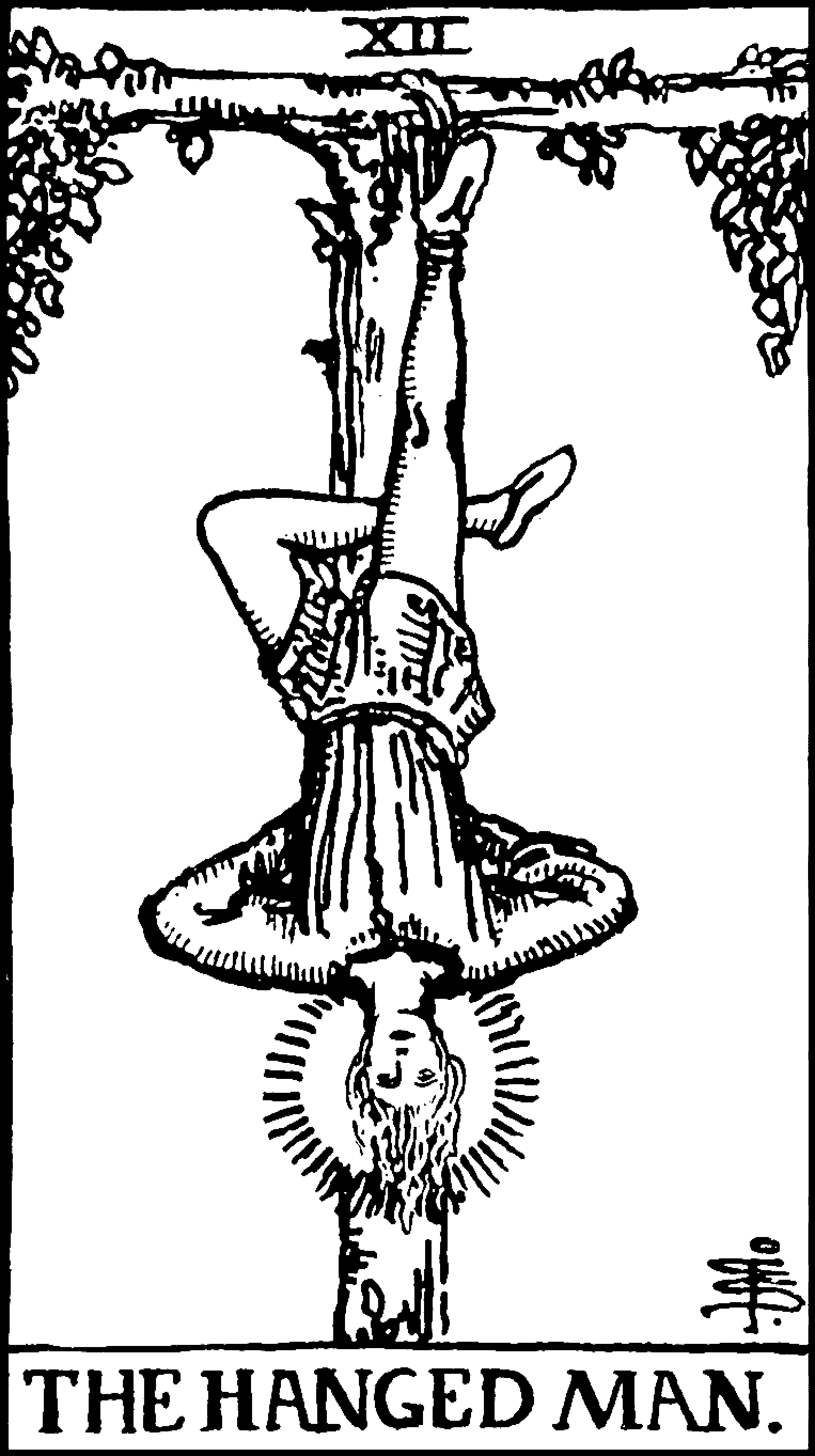
The Hanged Man

29. The Abysmal (Water)
19. Approach
We don’t consider ourselves at all religious (nor necessarily lax or cut-off in any way) but we do desire a richer and more consistent rapport with the mysteriousness of all this energy and varied stuffs — whether grand, small, distanced, ordinary or what have you… So this week we asked if there was any specific advice to maintaining and continually developing a personal spirituality. The answer received couldn’t be more obvious or more canny. A rich personal spirituality is to be found in meditation… Haha adoi… Of course, meditation. For the uninitiated meditating is neither arcanely magical nor necessarily relaxing, nor complicated. It is taking time away from the fray to sit and listen, to yourself and the world.
Also for the uninitiated, here are two links; the first is a lovely exposition of a basic type of meditation by Shinzen Young, the other is a guided meditation to perform during an actual meditation session. For the second link, just hit “play” when you are seated, alone, isolated and comfortable — then just follow the ‘instructions.’ If you are already a seasoned meditator, these are valuable links none the less:
"Do Nothing" Meditation — Shinzen Young
Guided Meditation — Joseph Goldstein
This week we pulled the The Hanged Man; it is one of the most mysterious cards in the whole of the deck. Our best and most concise interpretation would be: to see the world properly, you must see it reversed. To further this a bit more — we see this card as an exaltation of meditation. When one meditates seriously, they are reversing the world; instead of being quick and fighting, one is quiet and listening. Instead of ignoring, or falsely embroidering reality, one just faces it.
Our first hexagram this week is #29, The Abysmal (Water). The lovely (and we think wholly misinterpreted) Terence McKenna said something very relevant and in line with the meaning of this hexagram: “Don’t worry. You don’t know enough to worry… Who do you think you are that you should worry, for crying out loud? It’s a total waste of time. It presupposes such a knowledge of the situation that it is in fact a form of hubris.” Now from the I Ching: “the hexagram is intended to designate an objective situation to which one must become accustomed, not a subjective attitude. For danger due to a subjective attitude means either foolhardiness or guile. Hence too a ravine is used to symbolize danger, as it is a situation in which a person is in the same pass as water in a ravine, and, like the water, they can escape if they behave correctly.” In other words, don’t worry, be thorough, but keep moving. There were two changes this week, of which the specific notes are: don’t assimilate darkness but keep it at a distance and dangerous times are not good for great ambitions.
Also for the uninitiated, here are two links; the first is a lovely exposition of a basic type of meditation by Shinzen Young, the other is a guided meditation to perform during an actual meditation session. For the second link, just hit “play” when you are seated, alone, isolated and comfortable — then just follow the ‘instructions.’ If you are already a seasoned meditator, these are valuable links none the less:
"Do Nothing" Meditation — Shinzen Young
Guided Meditation — Joseph Goldstein
This week we pulled the The Hanged Man; it is one of the most mysterious cards in the whole of the deck. Our best and most concise interpretation would be: to see the world properly, you must see it reversed. To further this a bit more — we see this card as an exaltation of meditation. When one meditates seriously, they are reversing the world; instead of being quick and fighting, one is quiet and listening. Instead of ignoring, or falsely embroidering reality, one just faces it.
Our first hexagram this week is #29, The Abysmal (Water). The lovely (and we think wholly misinterpreted) Terence McKenna said something very relevant and in line with the meaning of this hexagram: “Don’t worry. You don’t know enough to worry… Who do you think you are that you should worry, for crying out loud? It’s a total waste of time. It presupposes such a knowledge of the situation that it is in fact a form of hubris.” Now from the I Ching: “the hexagram is intended to designate an objective situation to which one must become accustomed, not a subjective attitude. For danger due to a subjective attitude means either foolhardiness or guile. Hence too a ravine is used to symbolize danger, as it is a situation in which a person is in the same pass as water in a ravine, and, like the water, they can escape if they behave correctly.” In other words, don’t worry, be thorough, but keep moving. There were two changes this week, of which the specific notes are: don’t assimilate darkness but keep it at a distance and dangerous times are not good for great ambitions.