Jan 28 25
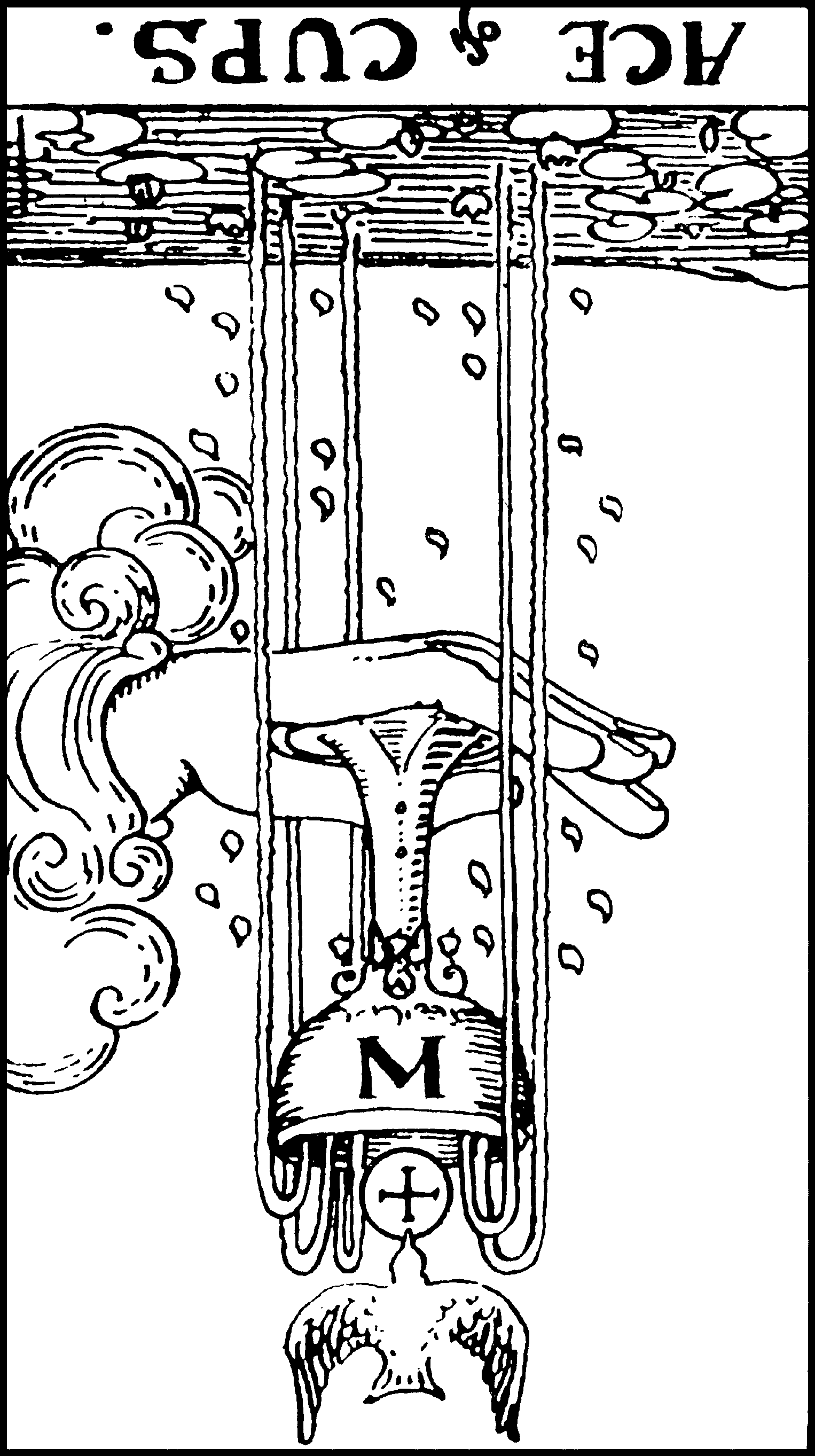
Ace of Cups (reversed)

56. The Wanderer
45. Gathering Together (Massing)
These first few lines are the general aphoristic returns for the week. They are raw and uninterpreted; there to use how you’d like. (The specific readings follow.)
From “M.S.”: It is our belief that humans are inherently self concerned; we are expressly trying to avoid words like narcissistic or selfish, as they are too severe. We attribute this quality of personal centering to the almost never talked about (but wholly pervasive and involuntary) condition of having completely private thoughts/brains. An example, one could say, “I really like that dress” but really be thinking “I hate that dress but I want you to like me.” (People can simply never know if the other is genuine or selfishly plodding.) This is the most normal and natural of occurrences — pretending otherwise seems absurd and damaging.
HOWEVER… we believe unbridled selfishness is neither good for the individual nor the group. Therefore it has always been our method to try to outpace our innate selfishness with our usefulness. That is, we strive to have a kind of evidential (extant) positive effect on those around us that is far beyond what might be called an exact exchange or perhaps better a cloaked parsimoniousness.
How does the oracle feel about such a method? If the answer is positive, any advice for improving it?
Your method is good, because it is realistic, but it would be even better if you tried being slightly less presumptuous. There is a fine line between cynicism and realism; to err on the side of realism you have to be open. There is a danger in having such a one tool for all things style. When outpacing your selfishness with your usefulness try to make sure that the spirit of the endeavor is modesty and adaptability; life rarely has anything like true foreknowledge.
Complete Reading
This week we pulled the Ace of Cups (reversed). Take some time to consider if you have obfuscating assumptions about the way the emotional dimension of a project or relationship is going to play out. Are you too presumptuous (or fatalistic) about how you think something is going to go? The shape and force of the rock dropped in the pond affects the farthest reaching ripples.
Our first hexagram this week is #56, The Wanderer. To a very real extent we are all wanderers; our home, at least in any perceivable way, is temporary on this earth. The phrase you can’t take it with you comes to mind here — rather than possessiveness we wanderers should consider modesty and adaptability as chief attributes. There are many wise spokes of thought that shoot out from these two qualities; should one think on them.
There were two changes this week of which the specific notes are: there are very few subjects and scenarios that one can be called an expert on, therefore one should be reserved in most matters. And if one knows that they will be meeting a situation where they are not an expert one should try to learn as much as possible beforehand.
Our second hexagram or how best to meet the changes is #45, Gathering Together (Massing). Though religion, because of narcissistic dogmatism and confusing and clear hypocrisy, is a questionable social binding mechanism (in this modern era) it still remains that when large groups of people gather a strong and clear moral binder is necessary for healthy mass interaction. Thinking here of situations like countries, large families, festivals, varied platforms and marketplaces. It befalls to the people of leadership to take the proper measures, ahead of these mass gatherings, to insure the safety of these large groups. The attitude of these leaders should never fall into cynicism (as regards human nature) but to be simply realistic — like a shepherd over sheep or a person directing rush hour mid-town traffic.
- Pay special attention to the effect that your emotional presumptions (or emotional biases) are having on how you start a relationship or project.
- One should consider adopting modesty and adaptability as chief aspirations/attributes.
- Leadership over large groups should be realistic but never cynical.
From “M.S.”: It is our belief that humans are inherently self concerned; we are expressly trying to avoid words like narcissistic or selfish, as they are too severe. We attribute this quality of personal centering to the almost never talked about (but wholly pervasive and involuntary) condition of having completely private thoughts/brains. An example, one could say, “I really like that dress” but really be thinking “I hate that dress but I want you to like me.” (People can simply never know if the other is genuine or selfishly plodding.) This is the most normal and natural of occurrences — pretending otherwise seems absurd and damaging.
HOWEVER… we believe unbridled selfishness is neither good for the individual nor the group. Therefore it has always been our method to try to outpace our innate selfishness with our usefulness. That is, we strive to have a kind of evidential (extant) positive effect on those around us that is far beyond what might be called an exact exchange or perhaps better a cloaked parsimoniousness.
How does the oracle feel about such a method? If the answer is positive, any advice for improving it?
Your method is good, because it is realistic, but it would be even better if you tried being slightly less presumptuous. There is a fine line between cynicism and realism; to err on the side of realism you have to be open. There is a danger in having such a one tool for all things style. When outpacing your selfishness with your usefulness try to make sure that the spirit of the endeavor is modesty and adaptability; life rarely has anything like true foreknowledge.
Complete Reading
This week we pulled the Ace of Cups (reversed). Take some time to consider if you have obfuscating assumptions about the way the emotional dimension of a project or relationship is going to play out. Are you too presumptuous (or fatalistic) about how you think something is going to go? The shape and force of the rock dropped in the pond affects the farthest reaching ripples.
Our first hexagram this week is #56, The Wanderer. To a very real extent we are all wanderers; our home, at least in any perceivable way, is temporary on this earth. The phrase you can’t take it with you comes to mind here — rather than possessiveness we wanderers should consider modesty and adaptability as chief attributes. There are many wise spokes of thought that shoot out from these two qualities; should one think on them.
There were two changes this week of which the specific notes are: there are very few subjects and scenarios that one can be called an expert on, therefore one should be reserved in most matters. And if one knows that they will be meeting a situation where they are not an expert one should try to learn as much as possible beforehand.
Our second hexagram or how best to meet the changes is #45, Gathering Together (Massing). Though religion, because of narcissistic dogmatism and confusing and clear hypocrisy, is a questionable social binding mechanism (in this modern era) it still remains that when large groups of people gather a strong and clear moral binder is necessary for healthy mass interaction. Thinking here of situations like countries, large families, festivals, varied platforms and marketplaces. It befalls to the people of leadership to take the proper measures, ahead of these mass gatherings, to insure the safety of these large groups. The attitude of these leaders should never fall into cynicism (as regards human nature) but to be simply realistic — like a shepherd over sheep or a person directing rush hour mid-town traffic.