May 16 23
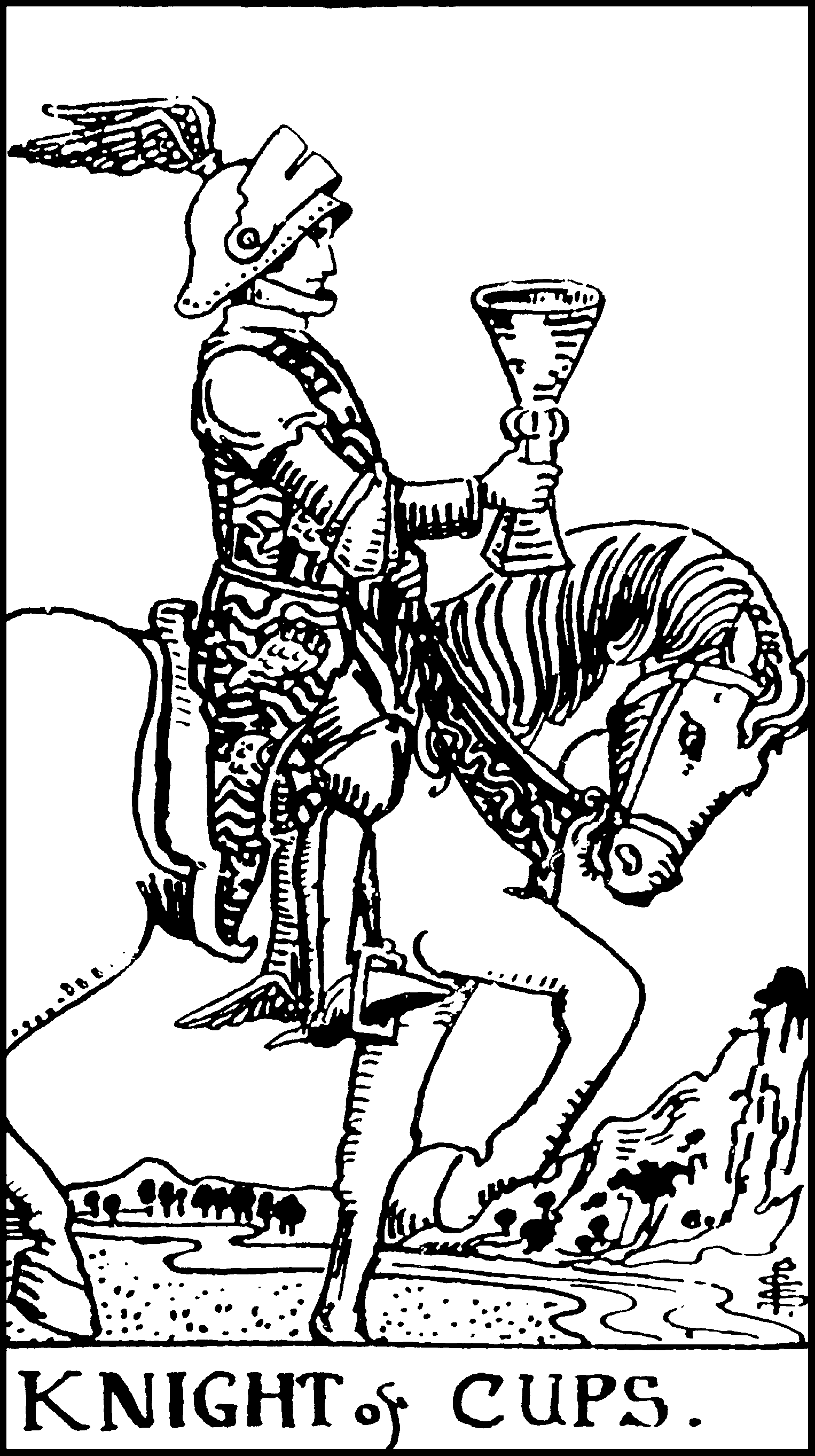
Knight of Cups

24. Return (The Turning Point)
37. The Family [The Clan]
These first few lines are the general aphoristic returns for the week. They are raw and uninterpreted; there to use how you’d like. (The specific readings follow.)
From “A.L.”: How does one overcome putting yourself out there? Being an artist, I feel it’s natural to be more of a secluded being… but i don’t have the courage to put my art out there because of the fear of people. At the same time I know it holds me back, but it’s not enough sometimes to give me the courage.
Art is often primarily a deputy or a liaison of an artist’s intention or ideas — fulfilling the desire to have something speak in one’s stead — so you’re not alone to want to be in the environs of your art, rather than that of people.
It would be nice to know exactly what scares you about humans — we’ll assume it’s similar to our own reservations about homo sapiens: people are often distracted regarding important matters or highly casual about other’s dearly held preoccupations or competitive/narcissistic/guarded in ways that block genuine discourse — as well as many more frustrating, anxiety-producing traits.
In light of this, as regards advice for putting your art out there, the oracle seems to be saying that first you have to be reflective and honest about your own faults. This process should be calm. It also seems to be pushing the notion that your art will be effective with people if it is matched by your whole person. This doesn’t mean that if you make dark, brooding pieces that you have to be dark and brooding in character, just that neither your personality nor your output can be phony — a life’s work to be sure.
Also, often people push out short bursts of intense personality/creativity but have little long-term stamina. If you can be consistent and disciplined with your practice — you increase the likelihood of public success by quite a bit — it’s a rare trait.
Complete Reading
This week we pulled the Temperance card. Here we have a symbol of self restraint, modesty and balance. So, there is intimation this period to take your time with important matters. Reject bombast in favor of meditation.
Our first hexagram this week is #24, Return (The Turning Point). This hexagram deals with a very specific time of the cycle, of which the I Ching is concerned — the time at the end of a process, right before the sequence begins again. It is said that just before renewal, calm and rest should be the mode. “Movement is just at its beginning; therefore it must be strengthened by rest so that it will not be dissipated by being used prematurely. This principle, i.e., of allowing energy that is renewing itself to be reinforced by rest, applies to all similar situations. The return of health after illness, the return of understanding after an estrangement: everything must be treated tenderly and with care at the beginning, so that the return may lead to a flowering.” There were three changes this week, of which the specific notes are: in the time right before renewal one should turn their gaze inward, to be honest about faults (it is said that no one would regret this path/process) and do not be obstinate about what is inevitable, if you do, misfortune will result.
Our second hexagram, the one that suggests how best to meet the challenges (or the changes) is #37, The Family (The Clan). With this hexagram we have a recommendation of proper conduct — not in the manners or etiquette sense, but conduct as related to efficacy. “…the influence on others must proceed from one’s own person. In order to be capable of producing such an influence, one’s words must have power, and this they can have only if they are based on something real, just as flame depends on its fuel. Words have influence only when they are pertinent and clearly related to definite circumstances. General discourses and admonitions have no effect whatsoever. Furthermore, the words must be supported by one’s entire conduct, just as the wind is made effective by its duration. Only firm and consistent conduct will make such an impression on others that they can adapt and conform to it. If words and conduct are not in accord and not consistent, they will have no effect.”
- Reject bombast in favor of meditation.
- Before renewal, prepare with calm and rest.
- Before renewal, turn your gaze inward, and be honest about faults.
- Do not be obstinate about what is inevitable, or else misfortune will result.
- In order to be effective, one’s words and actions must be supported by their entire character.
- If words and conduct are not in accord and not consistent, they will have no effect.
From “A.L.”: How does one overcome putting yourself out there? Being an artist, I feel it’s natural to be more of a secluded being… but i don’t have the courage to put my art out there because of the fear of people. At the same time I know it holds me back, but it’s not enough sometimes to give me the courage.
Art is often primarily a deputy or a liaison of an artist’s intention or ideas — fulfilling the desire to have something speak in one’s stead — so you’re not alone to want to be in the environs of your art, rather than that of people.
It would be nice to know exactly what scares you about humans — we’ll assume it’s similar to our own reservations about homo sapiens: people are often distracted regarding important matters or highly casual about other’s dearly held preoccupations or competitive/narcissistic/guarded in ways that block genuine discourse — as well as many more frustrating, anxiety-producing traits.
In light of this, as regards advice for putting your art out there, the oracle seems to be saying that first you have to be reflective and honest about your own faults. This process should be calm. It also seems to be pushing the notion that your art will be effective with people if it is matched by your whole person. This doesn’t mean that if you make dark, brooding pieces that you have to be dark and brooding in character, just that neither your personality nor your output can be phony — a life’s work to be sure.
Also, often people push out short bursts of intense personality/creativity but have little long-term stamina. If you can be consistent and disciplined with your practice — you increase the likelihood of public success by quite a bit — it’s a rare trait.
Complete Reading
This week we pulled the Temperance card. Here we have a symbol of self restraint, modesty and balance. So, there is intimation this period to take your time with important matters. Reject bombast in favor of meditation.
Our first hexagram this week is #24, Return (The Turning Point). This hexagram deals with a very specific time of the cycle, of which the I Ching is concerned — the time at the end of a process, right before the sequence begins again. It is said that just before renewal, calm and rest should be the mode. “Movement is just at its beginning; therefore it must be strengthened by rest so that it will not be dissipated by being used prematurely. This principle, i.e., of allowing energy that is renewing itself to be reinforced by rest, applies to all similar situations. The return of health after illness, the return of understanding after an estrangement: everything must be treated tenderly and with care at the beginning, so that the return may lead to a flowering.” There were three changes this week, of which the specific notes are: in the time right before renewal one should turn their gaze inward, to be honest about faults (it is said that no one would regret this path/process) and do not be obstinate about what is inevitable, if you do, misfortune will result.
Our second hexagram, the one that suggests how best to meet the challenges (or the changes) is #37, The Family (The Clan). With this hexagram we have a recommendation of proper conduct — not in the manners or etiquette sense, but conduct as related to efficacy. “…the influence on others must proceed from one’s own person. In order to be capable of producing such an influence, one’s words must have power, and this they can have only if they are based on something real, just as flame depends on its fuel. Words have influence only when they are pertinent and clearly related to definite circumstances. General discourses and admonitions have no effect whatsoever. Furthermore, the words must be supported by one’s entire conduct, just as the wind is made effective by its duration. Only firm and consistent conduct will make such an impression on others that they can adapt and conform to it. If words and conduct are not in accord and not consistent, they will have no effect.”